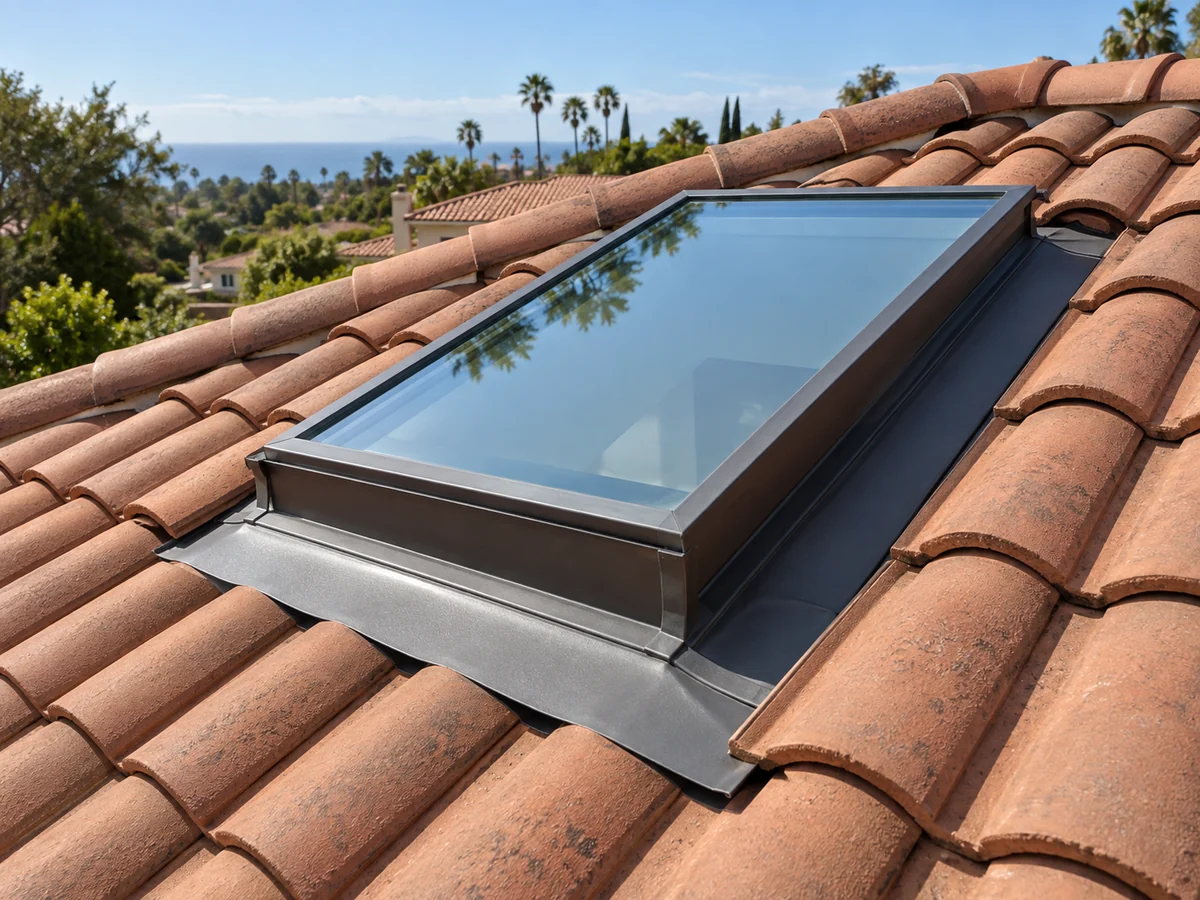
Lake Forest Craft Skylights organizes independent planning information for skylight flashing repair Lake Forest CA. Flashing directs roof water around the opening. A useful repair plan identifies the mounting type, roofing system, slope, underlayment, head, sill, side details, fasteners, adjacent tile, and the reason the existing drainage path failed. A qualified provider must inspect the property and confirm the final method, current credentials, price, schedule, permit path, and warranty terms.
Identify factory kit, site-built metal, or mixed detail
The visible metal may belong to a manufacturer system, a curb cap, a site-built assembly, or layers added during later repairs. Compatibility cannot be assumed from color or shape.
For skylight flashing repair, the assessment should record unit model, mounting style, flashing kit markings, metal profile, lap sequence, added patches, fastener pattern, and available current instructions. Each item should be tied to a photograph, model reference, measurement, public requirement, or written assumption where practical. The purpose is not to make the proposal longer. It is to expose the condition that supports the selected method and the condition that would change it.
Ask who owns this part of the work, what material or instruction controls it, what will remain visible for inspection, and what happens if the observed condition differs after access begins. A useful scope also states the boundary with adjacent roofing, framing, electrical, drywall, paint, or design work. Section 1 should end with a decision that another person can verify, not a vague promise that everything necessary is included.
Read the sill as the release point
The lower edge must release water onto the roof surface without trapping debris, reversing laps, or forcing water sideways. Tile and mortar conditions below the sill can change that route.
For skylight flashing repair, the assessment should record sill apron, corners, tile cut, open drainage space, debris, mortar, underlayment termination, and signs of repeated ponding or staining. Each item should be tied to a photograph, model reference, measurement, public requirement, or written assumption where practical. The purpose is not to make the proposal longer. It is to expose the condition that supports the selected method and the condition that would change it.
Ask who owns this part of the work, what material or instruction controls it, what will remain visible for inspection, and what happens if the observed condition differs after access begins. A useful scope also states the boundary with adjacent roofing, framing, electrical, drywall, paint, or design work. Section 2 should end with a decision that another person can verify, not a vague promise that everything necessary is included.
Follow the side pieces uphill
Side flashing needs a consistent relationship with each course or roof layer. Missing, short, bent, buried, or reverse-lapped pieces can interrupt the shingle-like drainage sequence.
For skylight flashing repair, the assessment should record piece length, course relationship, overlap, tile profile, side clearance, exposed edge, fasteners, underlayment, and previous repairs. Each item should be tied to a photograph, model reference, measurement, public requirement, or written assumption where practical. The purpose is not to make the proposal longer. It is to expose the condition that supports the selected method and the condition that would change it.
Ask who owns this part of the work, what material or instruction controls it, what will remain visible for inspection, and what happens if the observed condition differs after access begins. A useful scope also states the boundary with adjacent roofing, framing, electrical, drywall, paint, or design work. Section 3 should end with a decision that another person can verify, not a vague promise that everything necessary is included.
Give the head enough drainage space
The uphill head zone receives water and debris from above. A tight tile layout, debris pocket, low curb, blocked cricket, nearby valley, or patch can concentrate water at the opening.
For skylight flashing repair, the assessment should record head flashing, uphill clearance, debris path, tile support, curb height, underlayment lap, valley influence, and roof penetrations above. Each item should be tied to a photograph, model reference, measurement, public requirement, or written assumption where practical. The purpose is not to make the proposal longer. It is to expose the condition that supports the selected method and the condition that would change it.
Ask who owns this part of the work, what material or instruction controls it, what will remain visible for inspection, and what happens if the observed condition differs after access begins. A useful scope also states the boundary with adjacent roofing, framing, electrical, drywall, paint, or design work. Section 4 should end with a decision that another person can verify, not a vague promise that everything necessary is included.
Connect flashing to underlayment
Visible metal alone is not the complete drainage plane. The concealed underlayment transition should shed incidental water, and brittle or incorrectly lapped material may broaden the repair boundary.
For skylight flashing repair, the assessment should record underlayment type and condition, side and head laps, sill treatment, deck moisture, membrane compatibility, punctures, old adhesive, and dry-in sequence. Each item should be tied to a photograph, model reference, measurement, public requirement, or written assumption where practical. The purpose is not to make the proposal longer. It is to expose the condition that supports the selected method and the condition that would change it.
Ask who owns this part of the work, what material or instruction controls it, what will remain visible for inspection, and what happens if the observed condition differs after access begins. A useful scope also states the boundary with adjacent roofing, framing, electrical, drywall, paint, or design work. Section 5 should end with a decision that another person can verify, not a vague promise that everything necessary is included.
Remove incompatible patch layers
Layers of roofing cement or sealant can hide fasteners, trap water, block drainage, and prevent proper adhesion. Removal may expose damage or a detail that requires more than a narrow repair.
For skylight flashing repair, the assessment should record patch material, thickness, UV breakdown, trapped debris, substrate damage, safe removal method, disposal, and change trigger if the base is unsound. Each item should be tied to a photograph, model reference, measurement, public requirement, or written assumption where practical. The purpose is not to make the proposal longer. It is to expose the condition that supports the selected method and the condition that would change it.
Ask who owns this part of the work, what material or instruction controls it, what will remain visible for inspection, and what happens if the observed condition differs after access begins. A useful scope also states the boundary with adjacent roofing, framing, electrical, drywall, paint, or design work. Section 6 should end with a decision that another person can verify, not a vague promise that everything necessary is included.
Define the roof-restoration boundary
A flashing repair may disturb multiple tiles and reveal broader underlayment deterioration. The proposal should explain how far roof materials will be lifted and what happens if matching tile is unavailable.
For skylight flashing repair, the assessment should record work area, tile salvage, replacement source, color variation, batten repair, underlayment limit, daily dry-in, and responsibility for adjacent roof defects. Each item should be tied to a photograph, model reference, measurement, public requirement, or written assumption where practical. The purpose is not to make the proposal longer. It is to expose the condition that supports the selected method and the condition that would change it.
Ask who owns this part of the work, what material or instruction controls it, what will remain visible for inspection, and what happens if the observed condition differs after access begins. A useful scope also states the boundary with adjacent roofing, framing, electrical, drywall, paint, or design work. Section 7 should end with a decision that another person can verify, not a vague promise that everything necessary is included.
Photograph every concealed lap before closing
The most important details disappear when tile returns. Progress images should show the prepared deck or curb, underlayment integration, sill, sides, head, fasteners, and completed drainage space.
For skylight flashing repair, the assessment should record wide orientation image, close lap images, material labels, fastener placement, corner treatment, dry condition, completed roof, and any unresolved adjacent condition. Each item should be tied to a photograph, model reference, measurement, public requirement, or written assumption where practical. The purpose is not to make the proposal longer. It is to expose the condition that supports the selected method and the condition that would change it.
Ask who owns this part of the work, what material or instruction controls it, what will remain visible for inspection, and what happens if the observed condition differs after access begins. A useful scope also states the boundary with adjacent roofing, framing, electrical, drywall, paint, or design work. Section 8 should end with a decision that another person can verify, not a vague promise that everything necessary is included.
Compare the written scope before authorizing work
Use the California building standards, California building energy standards, Lake Forest permit guidance, manufacturer installation guidance, and ENERGY STAR skylight criteria as starting references, then confirm the documents that apply to the address, product, and proposed work. Public information changes, and a manufacturer detail only applies when the named product, slope, mount, glazing, and roof assembly match the project.
A useful comparison identifies the observed condition, selected method, materials, product models, access, protection, permit responsibility, inspections, exclusions, change triggers, finish limits, cleanup, photographs, care, and source of warranty terms. It should also distinguish a temporary measure from a permanent scope and keep neighboring roof defects separate unless they are expressly included.
Continue with Skylight Flashing Repair planning, the complete service library, local Orange County guides, an assessment request, related study 1, related study 2, related study 3, related study 4, and the Lake Forest heat and daylight guide. These links help compare related decisions without turning every product type or symptom into a duplicate page.
This site provides independent planning and lead-routing information. It does not replace direct inspection, current manufacturer instructions, municipal review, a design professional where required, or the written contract of the provider who performs the work.
Resolve the question with property evidence.
01What should a skylight flashing repair proposal identify?
It should identify the observed condition, selected method, product and materials, roof and interior boundaries, access, protection, permit and inspection responsibility, exclusions, change triggers, records, and source of warranty terms.
02Can the final scope be confirmed from photographs alone?
Photographs help prepare the assessment, but concealed layers, measurements, access, current documents, and direct property conditions may still require on-site review.
03Who confirms permit requirements in Lake Forest?
The responsible provider and property owner should confirm the current address-specific path with the City of Lake Forest and any applicable association before work begins.
04How should two proposals be compared?
Normalize both proposals into the same product, opening, roofing, glazing, controls, interior, permit, protection, exclusion, change-order, and closeout bands before comparing price.