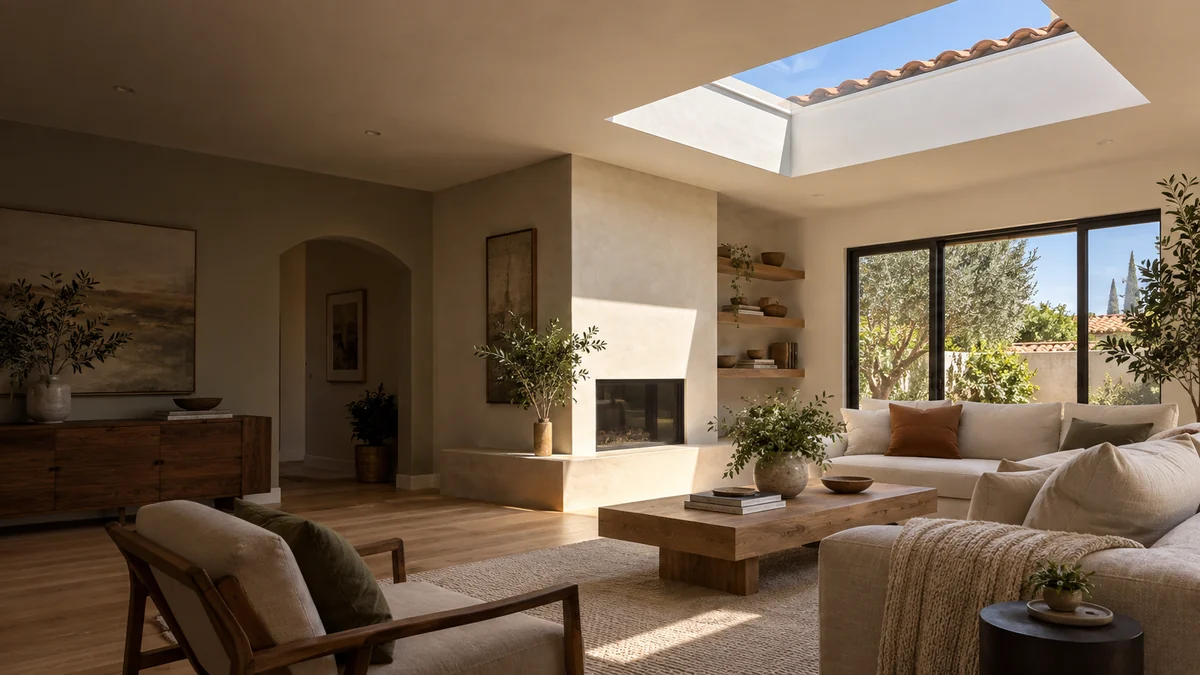
Lake Forest Craft Skylights organizes independent planning information for skylight blinds installation Lake Forest CA. Blinds and shades are interior hardware fitted to the skylight opening, which is a different decision from changing the glazing. This page covers shade selection, operation, and fit, while skylight heat control covers glazing, Low-E coatings, solar heat gain, and orientation. A qualified provider must inspect the property and confirm the final method, current credentials, price, schedule, and warranty terms. For a vented daylight opening instead of interior hardware, compare a solar powered venting skylight installation.
Separate interior shades from glazing changes
Blinds and shades and re-glazing are two different ways to manage daylight. Hardware manages glare, privacy, and some comfort without disturbing the roof, while a glazing or unit change alters solar heat gain more fundamentally but requires a broader construction scope.
For skylight blinds and shades, the assessment should record the comfort goal, glare source, privacy need, roof-disturbance tolerance, glazing alternative, interior-only scope, operation preference, and service access. Each item should be tied to a photograph, model reference, measurement, public requirement, or written assumption where practical. The purpose is not to make the proposal longer. It is to expose the condition that supports the selected method and the condition that would change it.
Ask who owns this part of the work, what material or instruction controls it, what will remain visible for inspection, and what happens if the observed condition differs after access begins. A useful scope also states the boundary with adjacent roofing, framing, electrical, drywall, paint, or design work. Section 1 should end with a decision that another person can verify, not a vague promise that everything necessary is included.
Choose blackout, light-filtering, or dual shades
Blackout shades block light for bedrooms and media rooms, light-filtering shades soften glare while keeping daylight, and dual day-and-night systems do both in one opening. The room use sets the type before any color or fabric is chosen.
For skylight blinds and shades, the assessment should record room use, desired darkness, glare pattern, daytime light goal, fabric openness, dual-system need, finish preference, and occupant hours. Each item should be tied to a photograph, model reference, measurement, public requirement, or written assumption where practical. The purpose is not to make the proposal longer. It is to expose the condition that supports the selected method and the condition that would change it.
Ask who owns this part of the work, what material or instruction controls it, what will remain visible for inspection, and what happens if the observed condition differs after access begins. A useful scope also states the boundary with adjacent roofing, framing, electrical, drywall, paint, or design work. Section 2 should end with a decision that another person can verify, not a vague promise that everything necessary is included.
Map manual, electric, and solar operation to reach
Operation runs on a ladder from manual rods to electric switches to solar and remote systems, and the right rung depends on ceiling height and reach. A solar or remote shade needs a charged source, programming, and a manual contingency, while a manual rod needs a clear reach path.
For skylight blinds and shades, the assessment should record ceiling height, reach path, manual rod option, electric feed, solar or remote system, power or charge source, programming, and manual backup. Each item should be tied to a photograph, model reference, measurement, public requirement, or written assumption where practical. The purpose is not to make the proposal longer. It is to expose the condition that supports the selected method and the condition that would change it.
Ask who owns this part of the work, what material or instruction controls it, what will remain visible for inspection, and what happens if the observed condition differs after access begins. A useful scope also states the boundary with adjacent roofing, framing, electrical, drywall, paint, or design work. Section 3 should end with a decision that another person can verify, not a vague promise that everything necessary is included.
Size and mount the shade to the opening
A shade must fit the actual skylight opening, frame, and mounting points, not a nominal catalog size. Measurement, frame type, and mount location decide whether the shade seals light at the edges and operates without binding.
For skylight blinds and shades, the assessment should record opening dimensions, frame type, mount surface, side-channel option, edge light gaps, bracket points, clearance, and obstruction. Each item should be tied to a photograph, model reference, measurement, public requirement, or written assumption where practical. The purpose is not to make the proposal longer. It is to expose the condition that supports the selected method and the condition that would change it.
Ask who owns this part of the work, what material or instruction controls it, what will remain visible for inspection, and what happens if the observed condition differs after access begins. A useful scope also states the boundary with adjacent roofing, framing, electrical, drywall, paint, or design work. Section 4 should end with a decision that another person can verify, not a vague promise that everything necessary is included.
Decide between retrofit and ordering with a new unit
A shade can be retrofitted to an existing opening or specified with a replacement unit, and compatibility must be confirmed by model. Retrofitting suits a sound existing skylight, while ordering with a new unit suits a planned skylight replacement.
For skylight blinds and shades, the assessment should record existing unit label, frame condition, retrofit compatibility, replacement timing, model match, ordering path, lead time, and responsibility split. Each item should be tied to a photograph, model reference, measurement, public requirement, or written assumption where practical. The purpose is not to make the proposal longer. It is to expose the condition that supports the selected method and the condition that would change it.
Ask who owns this part of the work, what material or instruction controls it, what will remain visible for inspection, and what happens if the observed condition differs after access begins. A useful scope also states the boundary with adjacent roofing, framing, electrical, drywall, paint, or design work. Section 5 should end with a decision that another person can verify, not a vague promise that everything necessary is included.
Plan cords, controls, and service in high ceilings
High-ceiling openings raise questions of cords, reach, and future service that a low shade does not. Cord safety, reachable controls, and a plan for cleaning or battery service belong in the scope before the shade is ordered.
For skylight blinds and shades, the assessment should record ceiling height, cord configuration, child-safety consideration, reachable control, cleaning access, battery or charge service, replacement path, and future maintenance. Each item should be tied to a photograph, model reference, measurement, public requirement, or written assumption where practical. The purpose is not to make the proposal longer. It is to expose the condition that supports the selected method and the condition that would change it.
Ask who owns this part of the work, what material or instruction controls it, what will remain visible for inspection, and what happens if the observed condition differs after access begins. A useful scope also states the boundary with adjacent roofing, framing, electrical, drywall, paint, or design work. Section 6 should end with a decision that another person can verify, not a vague promise that everything necessary is included.
Confirm model compatibility before ordering
Shades are matched to specific skylight models and frames, so compatibility is confirmed from the unit label and measurements rather than assumed. Any brand or solar-credit reference should be treated as unverified until confirmed against current product and federal guidance.
For skylight blinds and shades, the assessment should record unit make and model, frame profile, published compatibility, accessory list, measured dimensions, color or fabric options, warranty source, and unverified-claim flags. Each item should be tied to a photograph, model reference, measurement, public requirement, or written assumption where practical. The purpose is not to make the proposal longer. It is to expose the condition that supports the selected method and the condition that would change it.
Ask who owns this part of the work, what material or instruction controls it, what will remain visible for inspection, and what happens if the observed condition differs after access begins. A useful scope also states the boundary with adjacent roofing, framing, electrical, drywall, paint, or design work. Section 7 should end with a decision that another person can verify, not a vague promise that everything necessary is included. When fogged or failed glass is the real issue, see skylight glass replacement.
Record closeout, care, and warranty sources
Closeout should demonstrate operation across the full travel, confirm edge light control, and hand off care and warranty sources. A motorized or solar shade adds programming and battery records that a manual shade does not.
For skylight blinds and shades, the assessment should record operation test, full travel, edge light check, control handoff, care instructions, battery or charge notes, warranty source, and product identification. Each item should be tied to a photograph, model reference, measurement, public requirement, or written assumption where practical. The purpose is not to make the proposal longer. It is to expose the condition that supports the selected method and the condition that would change it.
Ask who owns this part of the work, what material or instruction controls it, what will remain visible for inspection, and what happens if the observed condition differs after access begins. A useful scope also states the boundary with adjacent roofing, framing, electrical, drywall, paint, or design work. Section 8 should end with a decision that another person can verify, not a vague promise that everything necessary is included.
Want to manage light and heat at the skylight? Request a free assessment or call the Lake Forest Craft Skylights line listed on this page. We route your details to a local Lake Forest and Orange County skylight provider.
Compare the written scope before authorizing work
Use the California building standards, California building energy standards, Lake Forest permit guidance, manufacturer installation guidance, and ENERGY STAR skylight criteria as starting references, then confirm the documents that apply to the address, product, and proposed work. Public information changes, and a manufacturer detail only applies when the named product, slope, mount, glazing, and roof assembly match the project.
A useful comparison identifies the observed condition, selected method, materials, product models, access, protection, permit responsibility, inspections, exclusions, change triggers, finish limits, cleanup, photographs, care, and source of warranty terms. It should also distinguish a temporary measure from a permanent scope and keep neighboring roof defects separate unless they are expressly included.
Continue with Skylight Blinds and Shades planning, the complete service library, local Orange County guides, an assessment request, related study 1, related study 2, related study 3, related study 4, and the Lake Forest heat and daylight guide. These links help compare related decisions without turning every product type or symptom into a duplicate page.
This site provides independent planning and lead-routing information. It does not replace direct inspection, current manufacturer instructions, municipal review, a design professional where required, or the written contract of the provider who performs the work.
Resolve the question with property evidence.
01Can blinds be added to a skylight I already have?
Often yes, depending on the frame and model, but compatibility and measurements are confirmed at assessment. Some openings accept a retrofit shade while others need a shade specified with a replacement unit.
02What is the difference between blackout and light-filtering skylight shades?
Blackout shades block light for bedrooms and media rooms, light-filtering shades soften glare while keeping daylight, and dual day-and-night systems combine both in one opening. The right choice follows the room use.
03How are shades operated on a high ceiling?
Options include manual rods, electric switches, and solar or remote systems. The right choice depends on reach, wiring access, and whether a charged solar source and manual backup are available.
04What should a skylight blinds and shades proposal identify?
It should identify the observed condition, selected method, product and materials, roof and interior boundaries, access, protection, permit and inspection responsibility, exclusions, change triggers, records, and source of warranty terms.
05Can the final scope be confirmed from photographs alone?
Photographs help prepare the assessment, but concealed layers, measurements, access, current documents, and direct property conditions may still require on-site review.
06Who confirms permit requirements in Lake Forest?
The responsible provider and property owner should confirm the current address-specific path with the City of Lake Forest and any applicable association before work begins.
07How should two proposals be compared?
Normalize both proposals into the same product, opening, roofing, glazing, controls, interior, permit, protection, exclusion, change-order, and closeout bands before comparing price.
08Do solar powered skylight blinds qualify for a federal tax credit?
Some sellers advertise a federal residential solar credit for solar powered skylight blinds. Treat the rate and eligibility as unverified, and confirm current federal and IRS guidance with a qualified tax adviser before relying on any credit. This page does not promise a credit or quote a rate.
09Can a discontinued or failed original skylight shade be replaced?
Often yes, either with the manufacturer's current equivalent or with an aftermarket shade sized and channeled to the opening. The available option depends on the skylight brand, model, and glass size, which should be confirmed before ordering.