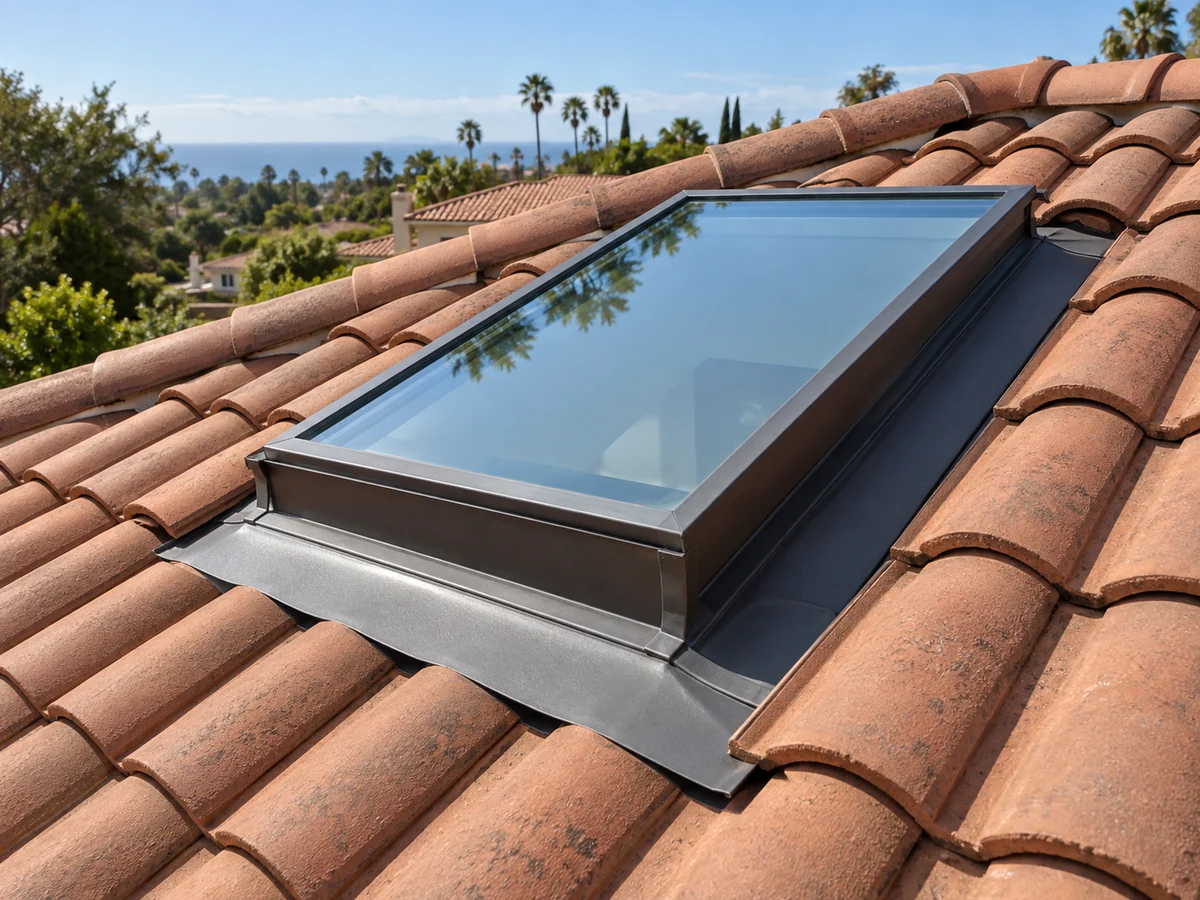
Lake Forest Craft Skylights provides independent planning information for skylight installation, replacement, and repair in San Clemente, California. San Clemente sits at the southern edge of the South Orange County service area near the San Diego County line, where coastal exposure and Spanish-tile roofs shape how a skylight opening, replacement, or leak repair is planned. A qualified local provider must inspect the address and confirm credentials, the current municipal and association path, product compatibility, price, schedule, and warranty terms before work begins.
Planning a skylight repair, replacement, or new opening in San Clemente? Call the Lake Forest line listed on this page or share the roof, tile type, room, and symptom for follow-up.
Plan skylight install, replacement, and repair in San Clemente
San Clemente homeowners usually ask us to plan one of three things: a brand-new opening in a dark coastal room, a straight swap of an aged unit, or a fix for a skylight that has started to leak. Match your documents to the actual job. A new opening maps to our skylight installation guide, a like-for-like swap follows the skylight replacement path, and a leak follows leaking skylight repair, which usually starts with a flashing and glass inspection rather than a full tear-off.
Because San Clemente sits at the southern boundary of the service area, confirm scheduling for the specific address instead of assuming same-day coverage. Describe the roof, the tile type, the room, and the symptom so a provider can prepare before an on-site visit.
Read coastal and Spanish-tile roofs honestly
Much of the San Clemente housing stock pairs stucco walls with clay or concrete Spanish tile, and some streets run close enough to the ocean that marine air reaches them more than inland ridgelines. Record what you actually see at the property rather than assuming one citywide condition: corrosion on exposed metal flashing or fasteners, sun-bleached acrylic domes, cloudy or fogged insulated glass, and cracked seals near the curb.
Tile work rewards a careful hand. Discontinued tile profiles can be hard to match, so a good plan records salvage quantity, expected breakage, the source of replacement pieces, acceptable color variation, and the work boundary if broader roof deterioration appears once tile is lifted. Tile calls for removal and salvage, an underlayment transition, correct curb or deck mounting, and flashing matched to the profile. None of this replaces a direct inspection of the roof plane and attic by a qualified local provider. For flashing-specific work, see skylight flashing repair; for a unit beyond repair, compare a like-for-like skylight replacement.
Account for salt-air exposure without overclaiming
Salt air can affect seals, finishes, metal flashing, and fasteners over time, and exposure varies street by street in San Clemente rather than following a single rule. Describe durability concerns generally and tie each one to a visible condition at the property instead of a blanket coastal claim. Where a skylight faces long afternoon sun or sits in a bright ocean-facing room, add the heat and glare question to the scope and compare it against our skylight repair notes before parts are ordered.
Confirm permits and any association context with the City
Review the current San Clemente Building Services at planning time. Save the page or document date in the project file, identify who will confirm the address-specific requirement, and align the proposal with any answer received. Public guidance can change, and not every property or scope follows the same route.
A roof-visible skylight can also touch any homeowners association rules covering location, profile, curb height, glazing appearance, and tile match. Confirm what the specific San Clemente property requires before finalizing a visible roof change; that review is separate from the building permit. Do not assume a citywide permit code; a new opening, a replacement, and a leak repair can each follow a different path.
What to photograph before a San Clemente assessment
Photograph the room from multiple corners, the ceiling location, the roof plane, the attic or shaft where accessible, the existing product label, and any symptom. Note salt residue or corrosion only where it is actually observed, and record roof type and approximate age, ceiling form, room use, sun timing, and related remodeling. This evidence helps a provider prepare without treating a photograph as a substitute for direct inspection.
For this San Clemente property, tie each decision to a measurement, photograph, product document, written assumption, or current public source. State who owns the task, what remains excluded, which condition could change the price or method, and what evidence will be handed to the owner after the work.
Compare glazing and comfort as separate choices
Visible transmittance, solar heat gain coefficient, U-factor, safety glazing, Low-E surfaces, tint, privacy, interior shades, and ventilation answer different questions. Ask for the product data associated with the exact model and compare it with the room’s orientation, occupied hours, and comfort concern.
For this San Clemente property, tie each decision to a measurement, photograph, product document, written assumption, or current public source. State who owns the task, what remains excluded, which condition could change the price or method, and what evidence will be handed to the owner after the work.
Define the tile-roof integration boundary
The proposal should identify tile removal and salvage, matching replacement pieces, battens where present, underlayment transition, curb or deck mount, flashing, fasteners, drainage, temporary dry-in, adjacent roof exclusions, and the response if concealed deterioration expands the work.
For this San Clemente property, tie each decision to a measurement, photograph, product document, written assumption, or current public source. State who owns the task, what remains excluded, which condition could change the price or method, and what evidence will be handed to the owner after the work.
Normalize every proposal into the same bands
Compare observation and design, product and shipping, access and protection, framing and opening, roof restoration, shaft and insulation, electrical and controls, drywall and paint, municipal and association work, cleanup, photographs, inspection records, and written exclusions. A price is useful only when its scope is visible.
For this San Clemente property, tie each decision to a measurement, photograph, product document, written assumption, or current public source. State who owns the task, what remains excluded, which condition could change the price or method, and what evidence will be handed to the owner after the work.
Close the project with an address-specific record
Keep model and serial information, glass ratings, mount type, approved documents, inspection outcome, before and after photographs, concealed-layer images, care instructions, control programming, change orders, and warranty sources. The record should help a future owner, roofer, or service provider identify the actual assembly.
For this San Clemente property, tie each decision to a measurement, photograph, product document, written assumption, or current public source. State who owns the task, what remains excluded, which condition could change the price or method, and what evidence will be handed to the owner after the work.
Continue the local planning path
Compare new skylight installation, replacement, skylight repair, leak diagnosis, and skylight flashing repair. Nearby planning contexts include San Juan Capistrano and Laguna Niguel; the full Orange County guide index keeps every town route visible.
Read the California building standards, California building energy standards, and ENERGY STAR skylight criteria as background only. The responsible provider must identify the current documents that apply to the actual address, opening, product, roof, and scope.
This is a planning and assessment-routing guide, not a statement that every San Clemente property needs the same permit, product, method, or provider.
Resolve the question with property evidence.
01Does every San Clemente skylight project follow the same permit path?
No. The address, work type, framing, roof changes, electrical controls, valuation, association context, and current city guidance can change the path. Confirm it for the actual scope.
02What should be photographed before requesting an assessment?
Photograph the room, ceiling, roof plane, attic or shaft where accessible, existing product labels, controls, symptoms, nearby roof transitions, and any prior patching.
03How should a tile-roof proposal be compared?
Make tile removal, salvage, matching replacements, battens, underlayment, mounting, flashing, dry-in, adjacent roof limits, breakage allowance, and closeout photographs explicit.
04Who verifies the provider and final scope?
The property owner should verify the selected provider’s current identity, credentials, insurance, references where desired, written scope, price, schedule, permit duties, and warranty source.
05Do you cover San Clemente from Lake Forest?
Yes. San Clemente is within the South Orange County service area, though it sits at the southern edge near the San Diego County line, so confirm scheduling for the actual address rather than assuming same-day coverage.
06My San Clemente skylight leaks after coastal storms, should it be repaired or replaced?
It depends on whether a flashing, seal, or gasket is failing or the unit itself is past its service life. An on-site look at the curb, glass, and attic after wind-driven rain is what settles repair versus replacement.
07Do San Clemente tile roofs need special skylight flashing?
Yes. Tile calls for removal and salvage, an underlayment transition, correct curb or deck mounting, and flashing matched to the tile profile. Ask any proposal to make the tile handling explicit before work begins.